03 July 2014

Aligning iOS apps with Common Core and National Standards for Learning Languages (ACTFL)


    Alignment of the National Standards for Learning Languages with the Common Core Standards

Although not formally tested in the same manner as English Language Arts and Math, World Language study is an essential component of global competences (EdWeek article) or of World-Readiness as labelled by ACTFL (The American Council on the Teaching of Foreign Language). Not only does language learning support global competences, it enhances and supports literacy in Social Studies, English Language Arts, and Science through the well-known "5 Cs" of Communication, Cultures, Connections, Comparisons, and Communities. 

To promote the links between foreign language study and world-readiness, ACTFL, the various AAT (American Association of Teachers of) language associations, and the Partnership for 21st Century Skills have created documents that detail the connections between the National Standards for Learning Languages and the Common Core English Language Arts Standards, also known as "The Crosswalk." For any language teacher who has had to justify the continuation of his or her program, these documents and research are of utmost importance. World Language classes should no longer be considered the "arts and crafts" elective for the drama and choir students. They are an indispensable component of a well-rounded college and career-ready, globally-minded curriculum.  


As many states shift to using the Common Core standards, materials labelled, "Aligned to Common Core," have appeared in textbook and teacher supply catalogs. Unfortunately, in the rush to provide "approved" materials, publishers and suppliers seem to have taken the core ideals of the standards a bit too literally by promoting their materials as a standardized curriculum (NPR report: The Common Core Curriculum Void). 

As it has been presented, there is no set curriculum for the CC standards. Teachers and districts are directed to use the standards to create units and lessons that will best meet the needs of their students and help prepare them for college and career experiences as global citizens.  

The same philosophy is true for technology tools. No app or Web-based tool has been "geared" to meet a specific Common Core standard. In exploring the Apple App store, one can find all sorts of apps labelled, "Common Core" but that do not explain how, why or in which way using the app will meet a standard or improve a student's performance. 


Symbaloo - View all of the apps on this blog post organized together on Symbaloo. There are three headings: Speaking/Listening, Reading, and Writing and are in subcategories based on the National and Common Core Standards. As a companion to the Symbaloo table, the apps have been similarly organized on this blog to offer a more in-depth investigation opportunity. Prices, tutorials, and further links provide teachers with a thorough description of the available tools.

Further blog posts over the next year will include apps for Reading, Writing, and Web-based tools. Please contribute any suggestions to this list in the comments, by Tweeting me @catherineku72 or by e-mail: catherineku72@gmail.com    

Speaking and Listening / Interpersonal (Speaking & Listening; Reading & Writing
ELA: Speaking and Listening - 
Standards for Learning Languages: Interpersonal 
(Speaking & Listening; Reading and Writing)

Screencasting


Prepare recorded presentations and tutorials for flipped (in-class or at-home) lessons that provide basic or extra information for students accessible anywhere at any time.  Presentations can also be used by substitute teachers or study groups. Beyond teacher-prepared presentations, students can share their collaborative efforts with the class or the teacher. 


As stated earlier, these app suggestions serve as ideas and options for teachers who wish to integrate technology in a thoughtful, meaningful manner. In choosing and aligning these apps, literacy in language at several was the objective.
As you can see, there are MANY apps available. My suggestion is to choose 1 or 2 from each category and experiment to find your preference. Each one has its positive aspects.


Free apps / 
Free with paid options


Use your iPad as an interactive
whiteboard to create publishable tutorials.

 
Knowmia 
App (Free and paid version) 
Video app review

Add text, pictures, and videos to your presentation. 


ShowMe 
App (Free) 
Video tutorial 

Use the basic toolbar to create recorded tutorials for publication.


Doceri 
App (Free and paid) 
Video tutorial 

Doceri offers multiples levels of collaboration and interaction. Control your laptop wirelessly through your iPad, record tutorials, and present live lessons. 


Baiboard 
App (Free) 
Video tutorial

Invite students to collaborate in real time with your images, text, or PDF. This app does not allow you to pre-record a presentation, but you can organize the presentation before collaboration.


Paid apps under $5.00


Doodlecast Pro 
App ($4.99)  
Video overview  

Create, save, and publish presentations from your iPad. 
 

Annotate, animate, and import to create visually appealing tutorials and presentations for publication.

Digital Storytelling: Voice & Image (video) only


Encourage student engagement, production, and voice through original or retold stories. The following apps focus on oral recordings with images that can be shared by e-mail, social media, or exported to YouTube. Click on the provided link to learn more. 


Free apps / 
Free with paid options 


30Hands  
App (Free) 


App (Free w/paid options) 


Videolicious (New to me, but looks impressive!)
App (Free) 


Sockpuppets  (A student favorite!)
App (Free w/paid option) 


Toontastic Edu
App (Free w/$9.99 all access)


 App (Free) 

Paid apps under $5.00 


App ($0.99) 
 

PuppetPals 2 Edu  ($4.99) 


Digital Storytelling: Text, Pictures, Video & Voice


Beyond a simple story, these apps will inspire students to add text and voice to their presentations.  

 Free apps / 
Free with paid options 
 

App (free) 
 
Adobe Voice (New to me, but looks great!)
App (Free) 


Shadow Puppet (A student favorite!)
App (Free) 


App (Free and paid) 

                                
Speaking and Listening / Interpersonal (Speaking & Listening; Reading & Writing

ELA: Speaking and Listening - 
Standards for Learning Languages: Interpersonal 
(Speaking & Listening; Reading and Writing)

Curation & Evaluation for Comprehension - "Students are knowledge curators -  let's help them use it" 
(Nicole Krueger - ISTE Connects blog) 

  
Free apps


App 


App 
 

App 


App (This will be updated. The app does not appear in the App Store at the time of publication. 


In choosing to integrate technology tools, teachers should explore various tools, experiment with them, and choose a few that best connect with or support their objectives and learning targets. The SAMR model, as proposed by Dr. Ruben Puentedura (and described by Kathy Schrock) provides guidance for teachers who are new to technology integration. 


20 June 2014

Curricular and Authentic Resource Curation for French teachers


AATF curricular content and authentic resources 
for French teachers
The wealth of online authentic resources (#authres), also known as realia, easily replaces quickly outdated textbook auxiliary materials. However, for many educators, the time required to research and organize these materials can be an issue. One time-saving solution is to crowd-source the curation (collection/classification) with local colleagues. Another is to look to an online Professional Learning Network (PLN) that has already begun the process. The idea that educators "steal" lessons or tools needs to give way to the collaborative model. Cite the origins of a lesson or tool when appropriate whether it was from a local conference or a Pinterest board. Educators appreciate when their curating or curricular work is acknowledged and shared with others. It is through this process that a PLN grows and develops new ideas and approaches. 

Based on my interactions with World Language teachers on Twitter and Facebook, I see that many French teachers are considering giving up their textbooks in favor of creating thematic units based on curated tools and curricular materials. To assist them in this transition and to save them time, the AATF Commission on Technology has set up several content resource curating tools. Each tool has its advantages, thus it is up to the user to decide which one best serves his or her needs. 

In building these resources, I have tried to classify the resources based on thematic units, learner levels, and topics. The AATF follows other resource curators (not always French teachers) - consider choosing a few to follow so that you have a wide variety of views and tools. If you find something you like, please share it and acknowledge the producer. If you have a suggestion to improve on the AATF resources, please contact Catherine Ousselin (catherineku72@gmail.com).   

Bonne chance et bonne recolte!


AATF Facebook 
Posts on news, culture, technology tools for World Language teachers and learners, AP Exam resources, and thematic unit ideas

Pinterest 
Resources for French classrooms, AP exam topics, infographics, cultural resources, and vocabulary


Delicious Over 300 categorized links to resources for reading, writing, listening, AP Exam topics, history, culture, and music


ScoopIt 
Curated resources organized by topic


YouTube 
Nearly 40 playlists organized by topic: Music, history, language, Francophone realia, television, and movies  


Twitter 
Tweets on Francophone news, culture, curricular resources, and AATF events 

19 January 2014

National French Week Video, Poster, and Animation Contest Winners - 2013


Félicitations à tous les participants! 

This is the second year of the National French Week Video, Poster, and Animation contest and the judges were highly impressed with the 48 submissions! We were excited by the variety and uniqueness of every entry. Please take some time and look over the top 5 winners, the honorable mentions, and the other participants' projects and start planning for next year's contest! The playlist for all of the video submissions can be found below. 

Bravo et bonne continuation! 
Première place: Geneva Community High School - Geneva, Illinois 
Vidéo: French the language of the 21st Century 
Professeur:  Martha  Behlow 
Élèves
Sierra B.
Kyle B.
Hannah B.
Alan C.
Kathleen C.
Stephanie C.
Cameron G.
Shelby P.
Lauren G.
Jakob E.
Samantha K.
Caroline N.
Alexa O.


Deuxième place: Geneva Community High School
Vidéo: French the language of the 21st Century 
Professeur:  Martha  Behlow 
Élève: Haley H. 


Troisième place: Linganore High School - Frederick, MD
Vidéo: French for New Markets 
Professeur:  Dragana Blonder 
Élèves
Tyler G.
Bridget D.
Jessica L.
Jack G.
Rhiannon W.


Quatrième place: Geneva Community High School
Vidéo: French is Timeless 
Professeur:  Martha  Behlow 
Élèves
Olivia S. 
Alison K. 
Vera K. 
Serena W. 
Olivia Z. 
Anna G.


Cinquième place: Plainview-Old Bethpage John F. Kennedy High School - Plainview, NY
Vidéo: L'Amour
Professeur: Madame Salzman
Élèves
Carly S.
Amanda G.


Mention Honorable: Wyoming High School -
Wyoming, OH
Vidéo: Français dans notre vie
Professeur: Cecile Laine
Élèves
Nat P.
Sam W.
Alex K.
Tommy B.


Mention Honorable: Shore Regional High School - 
West Long Branch, NJ
Vidéo500+ Miles for French
Professeur: Madame Alice Ennis Simonson
Élèves
Bailey W.
Carlyn P.
Dan S.


Mention Honorable: Chapel Hill High School - 
Chapel Hill, NC
VidéoLes Transports En Commun
Professeur: Christen Campbell
Élèves
Antoine S.
Thomas E.


Mention Honorable: Adlai E Stevenson HS - 
Licolnshire, IL
VidéoI Speak French
Professeur: Justin Frieman
Élèves:
Johnathan L.
Yana G. 
Braden M.


Mention Honorable: Geneva Community High School
VidéoLa Langue du 21e Siècle
Professeur: Pam Cabeen
Élèves:
Izabella B.
Madeleine B. 
Madeline P.


View all of the videos submitted to the National French Week Video/Poster/Animation Contest!


Students also submitted their entries using PowToons, Animoto, Glogster, and GoAnimate. Please click on the links to view their entries.


Glogster: Clearsprings High 
Jesse D. 

Glogster: Hopewell High
Brooke M. 
Kelsey S. 

Glogster: Hopewell High
Keondre B. 

GoAnimate : Deer Path Middle School 
Jacqui P. 
Charlotte M. 

GoAnimate  : Deer Path Middle School 
Grace A.
Kimie H.
Erin S.
Ben R.

Powtoon : Southold Jr/Sr High School
Dante T. 

Animoto:  Union Catholic 
Erin S.
Christina B.

AnimotoTriton Regional High School   
Mari O.

Animoto Paxon Hollow Middle School 
Jennifer J.

AnimotoClear Springs High 
Anthony N.  
AnimotoClear Springs High 
Meghan H.  

AnimotoClear Springs High 
Naazneen I.  

AnimotoClear Springs High 
Janie A.  


04 January 2014

Students as Digital Curators of World Language Resources


On December 5th, 2013, Catherine Ousselin hosted an AATF  Webinar entitled, "La Curation des ressources pédagogiques." The goals of the webinar were to present Web tools for curating and sharing resources with colleagues and students, and how to encourage students to become thoughtful and accurate curators of Web-based information. This post is a follow-up to the webinar and includes the tools that were discussed. 

Photo credit: Facing History
Teachers and librarians curators/organizers

Being a student in the pre-Internet years, I remember the resource carts that our teachers and  librarians organized for the students. As younger students, we did not have the research skills to find appropriate resources. The carts were designed to provide us the pertinent materials for our research and reports and to save us time. As we learned more about available resources, the cart at the library became less of a necessity and more of an ancillary tool. If a student wished to explore other options, the support staff would assist us in finding the resource or in evaluating its usefulness. With experience and guidance, students learned the basics of resource curation and evaluation. 

Do resource carts still exist? They do at my high school, but there are also a wide range of online databases and research Web sites that are available to the students. However helpful and well-organized these online tools may be, if students do not receive proper instruction and guidance on their use, they will resort to a Google search and find themselves afloat in a sea of links, many of which the students are unable to interpret or analyze for accuracy. It is recommended that all students receive a meaningful introduction by a well-trained librarian or staff member to the available tools as well as experience in evaluating them. This instruction could begin as early as fourth grade and should continue through high school.  


Photo credit: Journal du Net
The language component to research, organization, and curation

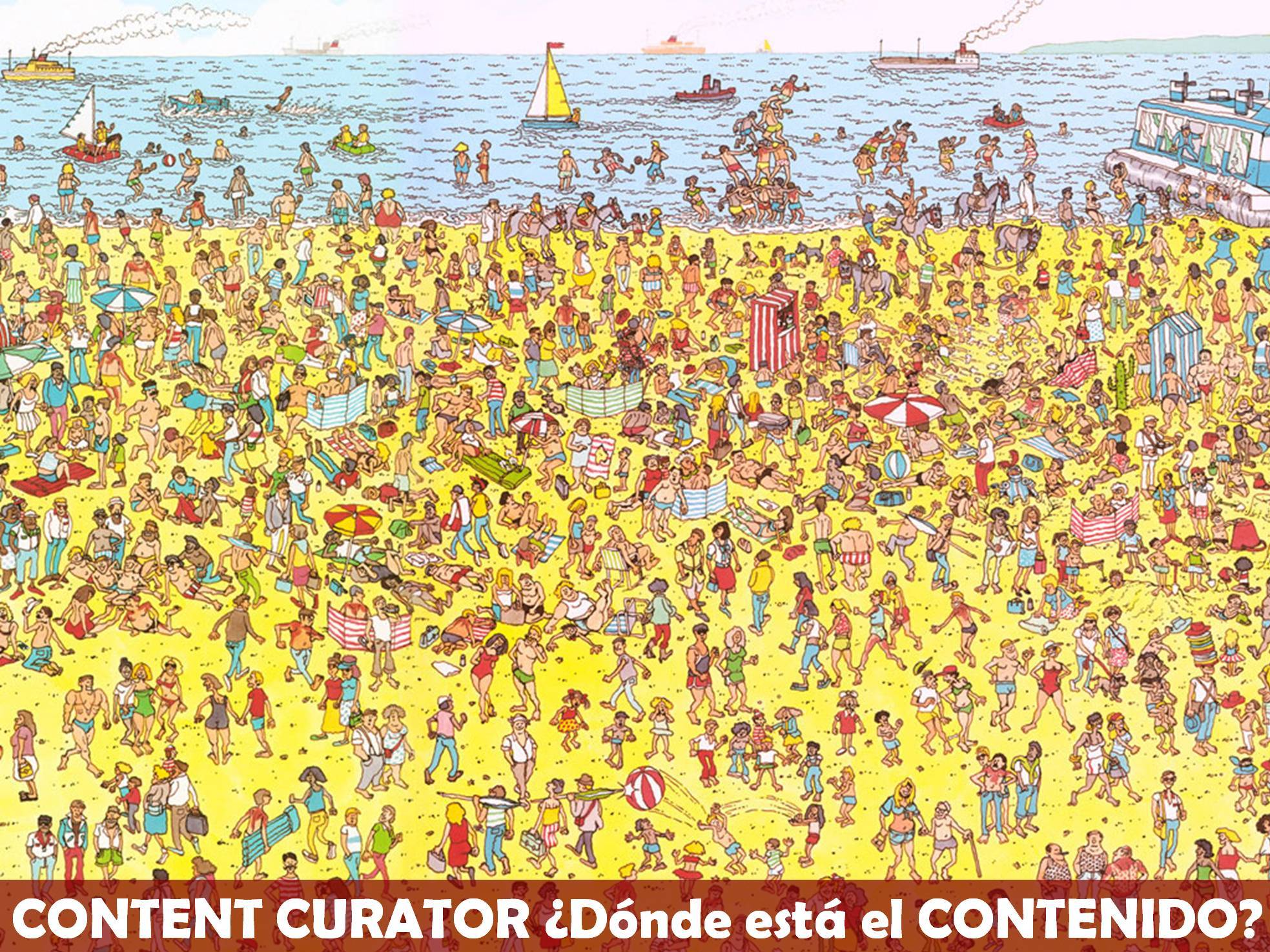
In perusing the shelves of my school library, I realized that there were no language or culture-specific resources available. If I were to send the students to a university library, they might be able to find what they need in the language, but that is not not an option where I teach. Additionally, the databases and research sites provided by the school library lead to English-language sites. Thus, the language teacher faces a quandary: In order to provide thoughtful and reliable Web-based resources to students in a well-organized fashion and to encourage students to develop their own research skills within the language, the teacher must gather and present the resources. Essentially, the teacher becomes a content curator and database builder (in his or her spare time, of course!). 


Used with Creative Commons permission: mkhmarketing

While the task may seem colossal, teachers should know that others have begun the work and have shared it online for others to use.  By connecting with a PLN (Professional Learning Network) for World Language teachers, it is possible to quickly reduce the amount of research. For language teachers, the Twitter #langchat group (Thursday 5-6 p.m. PST) is an excellent option for beginners. The chats are archived on the #langchat Wikipage. There are also language-specific chats, Facebook groups, and other social media outlets, but starting with Langchat provides a user-friendly introduction. Many of the participants in Langchat have their own prepared resources that might apply to your needs. Connecting with a few teachers may save you countless hours of preparation.  

After you have experimented with digital organization and curation for your students, allow them to explore and discover on "their own." Provide students with some suggestions of resources and remind them of the evaluation process. Visit Kathy Schrock's "Guide to Everything" site to find resources and rubrics on Web evaluation or ask your school librarian to give a short talk on the subject. 

On the site below, Corinne Weisberger states that there is a difference between organizing (bundling) and curating (commenting / augmenting) tools. Most teachers and students begin as organizers and grow to be curators who provide reflection on a given topic or tool. It is wise to start with the basics of collecting tools in order to build a healthy toolbox for the group. After this skill has been developed, explore the curator's role of commenting and expanding on the information.  


Resources on digital curating and research for students
1. 15 Lesson Plans for Making Students Better Online Researchers
2. Langwitches Blog: Students Becoming Curators of Information?
3. Corinne WeisgerberTeaching Students to Become Curators of Ideas: The Curation Project
 
Choosing the best tool(s) for you

There are many curation tools to choose from, you do not need to use them all. That simple statement is designed to prevent you from being overwhelmed. The number one question at my workshops is, "How do I know which one to choose?". There are a few ways to look at this:

1. Do you need it to be "visually appealing"? 
Creative commons permission
If so, choose Pinterest, Pearltrees, or LiveBinder. These sites use images, colors, and interactive buttons to attract interest. If you are looking for a basic, no-frills site: Diigo, Delicious, Scoop.It, or Paper.Li will work very well. In past workshops, more female teachers have expressed interest in Pinterest and more males preferred Pearltrees. Keep in mind your students' preferences as well. 


Creative commons permission
2. How easy is it to add resources? 
Adding a resource to a Web curating tool is almost as easy as adding a bookmark to your Web browser. In fact, I suggest that as you add a resource to the cloud, add it to your own bookmarks/favorites as well. In case of "disaster", you wil have a backup.
Pinterest, Diigo, Delicious, and Scoop.It allow you to add a resource directly from a Web site by clicking on an icon at the top of your Web browser. Upon initial registration, most of the sites offer to add an icon for ease of use. I recommend this option. The icon is there to remind you and renders the curation/organization task quick and easy. If you do not want an icon on your browser, simply highlight the URL (in the address bar), open a new tab, navigate to the Web tool site and add the link. If it is a video, choose the "share" option under the video and use that link. There are times when the URL of a video is not a direct link.   


Creative commons permission
3. How can I share the site with my students? Sharing a Web tool/site is quite easy. Many of the tools allow users to "follow" the curator. Followers can choose the update notification that best suits them. Others allow you to send out a notice via e-mail, Google+, Twitter, or other social media. It is important to update weekly and to remind students to use the resources as a primary source when beginning a search.  


Creative commons permission

4. Does the school district allow access?
 Before starting a curation project, check with your district IT personnel. If a site is blocked, it might mean that your students access it from off-campus or from their mobile devices. However, a discussion with the IT department might change a policy. A well-informed teacher can convince a superintendent to allow a tool. 

5. Personal preference and experimentation. 
If a tool does meet your expectations or if your students express a unified opinion, try another tool.  If you are experiencing difficulties, consult your PLN or tech-knowledgeable friend. Perhaps there is a solution to your issue. Do not give up on the process. If you decide to deactivate an account, be sure to transfer your resources to a new site. Allow the students time to "play" with the tool. Many of their teachers are not providing them with such resources, therefore their reliance on Google is difficult to change. Reinforce the ease of search that you are providing them. 

Creative common permission
Curation/organization tools mentioned in the webinar
These are the tools that I recommend for beginners. If you need a longer list, please visit my technology site for curation tools. Explore the examples to find the tool that interests you most. 

I have organized the tools starting from the easiest and least-visually engaging. Please contact me if you need any guidance. 

Diigo: Social bookmarking site that allows users to annotate, tag, and organize by themes. Students may follow.  
Don Doehla's public list: FLE - Français langue seconde


Delicious - Social bookmarking site with user-chosen and suggested tags for organization. Students may follow.  
AATF Delicious site - Click on "Tags" to see the subject areas.


PearlTrees - Create thematic mind maps with PDF documents, notes, Web sites, links to audio, and videos. Students may follow.  
Don Doehla's Pearltree


Scoop.It - An online thematic magazine that updates daily on its own based on user-chosen themes. Curators may also add links to Web sites,videos, and comments, but may not upload documents directly. Students may follow.  
AATF Scoop.It page


Paper.Li - Very similar to Scoop.It
Paper.Li search for FLE 


Pinterest Create themes and images with links to Web sites or videos. You may upload your own images and add short notes to them, but they must be jpeg, gifs, or pngs. Students may follow.  


LiveBinder - Highly interactive! Upload documents, embed videos or audio, link to Web sites, or create student portfolios or e-textbooks. This tool is suggested for those who have a great deal of content to share, but do not have a Web site, blog, Edmodo, or Blackboard/Moodle. 

French 1 example 


26 June 2013

Présentations du Webinar de l'AATF: 26 juin 2013

The AATF held its first pre-conference Webinar on 26 June 2013. Please explore the presentations and leave your questions or comments below. We will continue offering thematic Webinars throughout the year. 

Jayne Abrate - Utiliser les activités en classe pour la promotion du français.


Catherine Ousselin - Les réseaux sociaux pour les enseignants 


Magali Boutiot - Etre francophone en Nouvelle Angleterre

16 June 2013

Thinglink for World Language Educators and Learners

Photo credit link to Thinglink
Thinglink for World Language Educators and Learners

Traditionally, language teachers have given students vocabulary lists to memorize followed by pictures to label. While it is important that the students interact with visual content, a simple picture with a basic word or sentence does not engage a student at his or her fullest capacity. The knowledge provided for this task was teacher-centered and evidence of student learning involved regurgitation of the content. However, for deeper knowledge of vocabulary and grammar, it is recommended that students learn the concepts through contextual audio, visual, and spoken examples. Thinglink is a Web tool that allows students and teachers to annotate an image with video, audio, and textual tags. The tool is useful for educators who wish to provide a more thoughtful introduction to vocabulary, grammar, or culture with interactive (and student-chosen) elements. It is also an excellent assessment tool for learners as it requires them to demonstrate their comprehension of the concept beyond a basic translation.

In my example, I have used the idea of animal descriptions. This could be any thematic concept (tense, storytelling, vocabulary, culture). My 1st year students learn the verbs “to have,” “to be,” adjectives and verb conjugations through animal vocabulary. It is an engaging thematic unit for them as they are familiar with and interested in animals.


The expected outcomes of the unit are:
1. Description of animal body parts using the “to have” verb.
2. Description of animal size and personality with the “to be” verb.
3. Description of animal habitat and activities using appropriate vocabulary and a variety of verbs.   
4. Demonstration of knowledge of the animals that live in the local biosphere.
5. Demonstration of knowledge of endangered animals and their needs.
6. Discovery of new animals, vocabulary, and descriptive language.

In the initial introduction of animals, the teacher may choose to prepare 5-10 Thinglink interactive images as the “romance / enticing” activity that present the intended vocabulary and verb sets. The images should provide visual and auditory stimulation through Comprehensible Input (Krashengeared toward the appropriate level. Students are able to explore and discover the concepts in a “natural” fashion. While this is not the entire presentation of the vocabulary and verbs, it allows an initial and comprehensible introduction that will entice and not intimidate the learner.  Consistent repetition of the core concepts (have, be, verbs, body parts) leads the learner to interact with a basic overview of the intended outcomes.
In my example, I have used the “to have” verb with body parts. I produced a short sound clip through SoundCloud (think Twitter for audio, without the 140 character limit!) to describe a squirrel (It is smart, sneaky, small, etc.) along with common squirrel activities (running, jumping, eating, etc.).The embedded and subtitled video provides exposure to authentic language in a non-threatening, engaging, and amusing setting. Note that I have not included a grammar-based video describing the verb conjugations and adjective accordance.
Using a tool such as Thinglink provides a space for students to feel as though they are learning, but through a self-guided investigation.

For an assessment of student growth, teachers may assign 3-4 animals per student with a list of requirements for tags. In this manner, the student will demonstrate his or her speaking, reading, and aural comprehension by building a tagged image encompassing these standards. The task is personalized because the students choose the animals and the media. In my experience, students demonstrate their strongest work when they are given a structured task, but with the freedom to adapt it with their own knowledge and artistic styles.

When working with Web tools, I require that students write, review and rehearse their eventual demonstrations on paper and in person before they commit to the Web. Allowing free reign on the Internet without preparation may lead to plagiarism, Google translations, or direct copy/paste of a text. As always, teach students the basic steps that they should follow with any research and production. The fact that this project is Web-based should not detract from core standards and expectations.  


To guide you through your first Thinglink creation, I included screen captures of the steps as well as the Thinglink-produced SlideShare and links to the various media types. You should create your own account on which you experiment before introducing the students to the site. Providing the learners with your first few examples will allow them to conceptualize the expected outcomes and procedures. Demonstrate the basics of uploading a picture, Web-appropriate behaviors (digital citizenship basics), assessment of media (video length, language, appropriateness), and recording to SoundCloud.

Screen Shots from Picassa Web - Click directly on the slideshow (or HERE) to view a larger version in Picassa. Captions for the pictures appear at the bottom. 


Thinglink SlideShare


I suggest having one account for Thinglink and SoundCloud to track student work and progress. In the past, I have provided one password for the entire class for both sites. You may wish to have students (if age and district policy allows it) to create their own accounts for each site and have students share their work. If your district does not allow YouTube access, ask students to research videos at home and send themselves or you the link to the videos. The bonus to Web-based tools is that students may work on these projects at home as long as their work has been previously prepared and approved.   

Lastly, Thinglink has a new iOS app for iPods, Pads, and Phones. In my investigation of this free app, the user is able to add video and text to a picture, but I have not found (as of June 2013) a way to add a SoundCloud audio file.

I have built this lesson based on basic requirements and assumptions. If these requirements do not meet your realities, please contact me and we can discuss options and workarounds.

1. Access to computer lab OR iOS app (iPod/Pad/Phone)
2. Home access to computer or iOS device.
3. SoundCloud access with microphone or recording device. SoundCloud is available as an app on Android and iOS devices. A file may be recorded on the device, uploaded, and sent as a link to be added to the Thinglink image.
4. YouTube access for teachers and/or students at home or at school.

The 2D paper-bound textbook is fast meeting its end. The need for interactive and engaging replacements is a reality. Language teachers are usually granted the most freedom in exploration and innovation. Therefore, it is important to investigate the appropriate, easy-to-use, and FREE tools that are available that can be adapted to language learning and teaching. Thinglink is an excellent tool for both learners and educators. Please let me know if you have any questions, concerns, or thematic ideas.
Bonne chance et bon surf!
Catherine Ousselin
www.catherine-ousselin.org/technology.html  

Additional blogs and references to Thinglink:
1. Free Technology for Teachers: Thinglinks Launches a Free iPad App 
2. AuntyTechIdeas: Educate with Thinglink